Organization Logo
HomeMapLimited Gov. RatingsDist. Gradesionicons-v5-aLegislationionicons-v5-aCategoriesionicons-v5-aReportsionicons-v5-aAbout
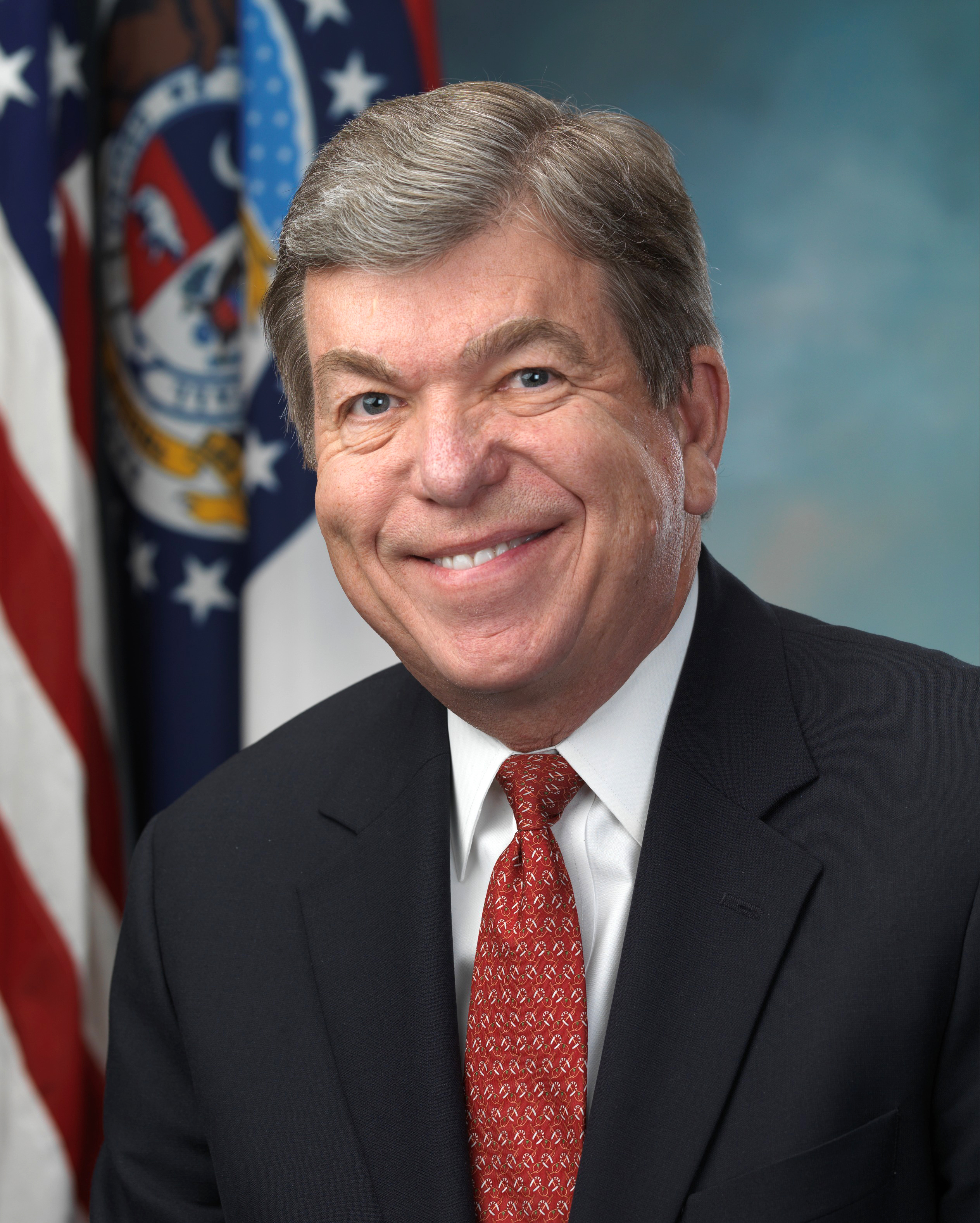
Sen. Roy Blunt headshot

Roy Blunt Voting Record & Scorecard | Institute for Legislative Analysis

US Senator from MO

Republican

2022 Alignment:

39.47%

District Performance
District Estimate: 84%
District Performance: -45 (39.47%)
District Based Rating:
F

Lifetime Ratings by Policy Category

Click Icon to Filter Table

Title

Lawmaker Position

Delaying Government Interference in the Private Negotiations of the Railroad Industry and Union through a 60 Day "Cooling off" Period before Congressional Involvement.

The Sullivan amendment #6503 to a resolution requiring unions and railroads to accept the most recent tentative agreement to end the labor dispute provides a 60 day "cooling off" period beyond the December 8th deadline to let both parties further negotiate their differences and avoid congressional interference.
Support is the Limited Government Position as it is not the role of government to interfere in the private negotiations of parties within the private sector.
Instead, lawmakers should seek to prevent such problems from occurring in the first place by removing regulatory barriers that restrict competition and drive-up labor costs, as well as ensure all employees have the "right to work" without being forced to join a labor union.
Against
Limited
Government

Hiking Non-Defense Domestic Spending by 7% and Promoting Cronyism through the Revival of Earmarks.

The "Consolidated Appropriations Act, 2022" funds government through the remainder of 2022. The package hikes spending by an average of 7 percent, sets aside over $20 billion for climate change research and resilience, and revives the practice of earmarks - congressionally directed spending - which has not been permitted for years due to the cronyism of the practice.
Oppose is the Limited Government Position as this bill further fuels out-of-control spending despite the fact congress is running a budget deficit of $1.
4 trillion. Significant cuts must take place across government in order to reverse our $30 trillion national debt, which coupled with the over $185 trillion in unfunded federal liabilities, represent the greatest existential threat facing this country.
Against
Limited
Government

Protecting Taxpayers by "Cutting the Pork" in the Budget through the Elimination of All Earmarks within the 2022 Funding Package.

The Braun amendment #4990 to the "Consolidated Appropriations Act, 2022" eliminates over 367 pages of earmarks within the spending package that funds government through the rest of the year. These earmarks, which total $8 billion, represent pet projects that individual members of congress have added into the bill.
Support is the Limited Government Position as this measure will at least slightly improve the horrendous level of wasteful spending within the bill.
However, much larger spending cuts must take place across government in order to reverse our $30 trillion national debt, which, when coupled with the over $185 trillion in unfunded federal liabilities, represents the greatest existential threat facing this country.
Against
Limited
Government

Bypassing the New Congress by Ramming Through $1.7 Trillion in Spending in the Final Days of the Lame Duck Session.

The "Consolidated Appropriations Act, 2023", which was passed on December 23, 2022 funds government through the rest of fiscal year 2023. The package is over 4,000 pages long and included numerous earmarks, ultimately amounting to $1.7 trillion in spending. Spending increases included 5.5% in domestic spending and 10% in defense spending.
Oppose is the Limited Government Position as this measure was voted upon only days before the new congress, which would likely have significantly cut spending within the bill due to Republicans taking control of the House.
The bill also contained nearly $50 billion in additional spending on Ukraine (without safeguards to prevent corruption), bringing the year's total to $113 billion - totaling more than half the size of Ukraine's entire pre-war economy.
Against
Limited
Government

Protecting Taxpayers by "Cutting the Pork" in the Budget through the Elimination of All Earmarks within the 2023 Funding Package.

The Johnson amendment #6555 to the "Consolidated Appropriations Act, 2023", which funds government through fiscal year 2023, eliminates hundreds of pages of earmarks within the spending package. These earmarks, which total $9.8 billion represent pet projects that individual members of congress have added into the bill.
Support is the Limited Government Position as this measure will at least slightly decrease the horrendous level of wasteful spending within the bill.
However, much larger spending cuts must take place across government in order to reverse our $30 trillion national debt, which, when coupled with the over $185 trillion in unfunded federal liabilities, represents the greatest existential threat facing this country.
Against
Limited
Government

Exposing Employers to Frivolous Litigation by Creating Multiple New Avenues for Plaintiff's Attorneys of Pregnant Workers to Sue for Alleged Discrimination.

The Cassidy amendment #6558 to the massive lame duck spending bill, known as the "Consolidated Appropriations Act, 2023", implants the language of H.R. 1065 "Pregnant Workers Fairness Act" into the bill. This provision makes it an unlawful employment practice if an employer with 15 or more employees fails to provide a series of new benefits and accommodations to a pregnant employee or job applicant. For example, a cause of action can be brought against an employer if they fail to provide additional break periods, require an employee to take leave due to a pregnancy limitation if a reasonable accommodation could be provided, or do not provide certain amenities, such as a stool to sit on during the workday.
Oppose is the Limited Government Position as employers are already incentivized to establish safe and productive work environments and this government overreach into the private sector unnecessarily exposes employers to new avenues of frivolous litigation that may be advanced by deviant plaintiffs\' attorneys.
Against
Limited
Government

Strengthening National Security by Prohibiting DHS from Utilizing Taxpayer Funds to Transport Immigrants that Enter the Country Unlawfully to Destinations Further Within the U.S.

The Johnson amendment #6559 to the "Consolidated Appropriations Act, 2023", which funds government through fiscal year 2023, would prevent border management funds from being utilized by the Department of Homeland Security (DHS) to transport Migrants within the U.S. unless to a deportation location or detention facility. The amendment is in response to a leaked DHS plan wherein the agency would pay to transport individuals who entered the country unlawfully to destinations away from the border and deeper into the U.S.
Oppose is the Limited Government Position as, despite the need to grow the U.
S. economy through reforms to the immigration system that increase the number of skilled individuals who may enter and work in our country, the promotion of an open-border immigration system places an immense drain on U.S. infrastructure and taxpayer resources ranging from welfare to the education system, while also creating serious law enforcement and national security issues.
Against
Limited
Government

Advancing Fiscal Responsibility by Requiring a Two-Thirds Vote (Instead of Three-Fifths) to Override the "Pay-Go Rules" which Require Any New Spending to be Offset.

The Paul amendment #6561 to the "Consolidated Appropriations Act, 2023" requires 67 Senators to waive a budget point of order instead of 60 under the "pay-go rules" which require any new spending to be offset. As a result, it will be more difficult to pass massive omnibus spending packages that add to the deficit.
Support is the Limited Government Position as this measure will at least increase the difficulty to advance horrendous spending packages that have become a common occurrence over the past few years.
However, even greater measures and large spending cuts must take place across government in order to reverse our $30 trillion national debt, which, when coupled with the over $185 trillion in unfunded federal liabilities, represents the greatest existential threat facing this country.
Against
Limited
Government

Imposing Overreaching New Federal Mandates on the Private Sector Concerning Workplace Breast Feeding.

The Merkley amendment #6595 to the massive lame duck spending bill, known as the "Consolidated Appropriations Act, 2023", places a series of new regulations on private companies concerning accommodations for breastfeeding up to a year after the birth of an employee's child. For example, employers must provide reasonable break times and a shielded location other than a bathroom for employees to express breast milk.
Oppose is the Limited Government Position as employers are already incentivized to establish safe and productive work environments and this government overreach into the private sector unnecessarily exposes employers to new avenues of frivolous litigation that may be advanced by deviant plaintiffs\' attorneys.
Against
Limited
Government

Providing an Additional $1 Billion to the 9/11 Compensation Fund without Desperately Needed Reforms to Prevent Continued Cash Grabs by Law Firms.

The Gillibrand Amendment #6607 to the massive lame duck spending bill, known as the "Consolidated Appropriations Act, 2023", provides an additional $1 Billion to the World Trade Center Health Program. This program, which currently has over 100,000 enrollees, provides compensation for health conditions that individuals may develop who were near the Twin Towers on 9/11 or sometime over the following 9 months, including first responders, residents, workers, teachers, students, tourists, etc. Due to the benefits of the program, such as compensation for physical and mental health conditions - including loss of income and pain and suffering that may have been incurred from the event - the trust fund continues to run low on funds and outpace expected expenditures.
Oppose is the Limited Government Position as first responders and workers who spent substantial time assisting with the clean-up of the tragedy deserve care for the health complications that they sustained due to their work.
However, this well-intended program has instead been abused at the expense of both victims and taxpayers by greedy plaintiffs' attorneys who search for any individual who may have briefly been in the vicinity during the months following the event, and then work to extract non-economic damages. Additional funding should not be provided to this program until reforms have been implemented to stop this abuse.
Against
Limited
Government

Eliminating a Key Fiscal Safeguard within the U.S. Postal Service Resulting in $60 Billion in Unfunded Liabilities being Placed on Taxpayers.

The "Postal Service Reform Act of 2022" repeals a key fiscal safeguard implemented in 2006 which requires the United States Postal Service to prepay future retirement health benefits (i.e. "pay as you go"), thus now allowing USPS to further grow the over $60 billion in unfunded liabilities on its books.
Oppose is the Limited Government Position as the repeal of this essential safeguard will result in even less fiscal accountability at the agency and further balloon the already enormous amount of unfunded liabilities, which will ultimately become the responsibility of taxpayers.
Against
Limited
Government

Weakening Civil Liberties by Providing the Department of Justice Overreaching New Powers Through the Domestic Terrorism Prevention Act.

The "Domestic Terrorism Prevention Act of 2022" provides the Department of Homeland Security (DHS), the Department of Justice (DOJ), and the Federal Bureau of Investigation (FBI) a series of new powers and duties, including assessing the domestic terrorism threat posed by "white supremacist and neo-Nazi infiltration of federal, state, and local law enforcement agencies and the uniformed services."
Oppose is the Limited Government Position as this bill provides employees within the DOJ, DHS, and FBI overreaching new surveillance and investigative powers and does not contain critical safeguards to protect civil liberties under the Fourth Amendment.
Additionally, there have been numerous cases of recent politicized actions taking place within the FBI, including their support of a letter from the National School Boards Association that characterized parental engagement on school curriculums as "heinous actions" that "could be the equivalent to a form of domestic terrorism."
Supports
Limited
Government

Expanding Cronyism and Corporate Welfare for Semiconductor Manufacturers Through Billions in Subsidies and Tax Credits Under the CHIPS and Science Act.

The "Chips and Science Act" provides $52.7 billion in subsidies to manufacturers of semiconductors plus an additional $24 billion in tax credits. The bill also provides over $200 billion in additional funding to the National Science Foundation and the Departments of Energy and Commerce for initiatives surrounding STEM, R&D, and workforce and economic development programs.
Oppose is the Limited Government Position as taxpayers should not be forced to subsidize government-favored private business entities.
The free market is far better equipped to engage in research and development, not government officials who are attempting to centrally plan research efforts without a plan to track financial accountability or measure if taxpayer funded resource are used effectively.
Against
Limited
Government

Opposing the Paris Climate Agreement and Blocking Wasteful Spending, Including $2 Billion for Developing Nations to Purchase Electric Vehicles and $8 Billion to the U.N. Green Climate Fund.

The Lee motion to the "United States Innovation and Competition Act of 2021" instructs senate conferees to not include certain provisions within the house version of the bill. For example, the motion eliminates a provision that provides developing nations $2 billion per year indefinitely to purchase zero emissions vehicles. Another cut is a provision that provides $8 billion to the U.N. green climate fund, - which has historically given money to China. Furthermore, the motion revokes a provision stating that the United States should implement the Paris Climate Agreement.
Oppose is the Limited Government Position as adoption of the Paris Agreement is estimated to lead to a 20 percent increase in the costs for the average American family's electric bill and shrink the U.
S. national GDP by $2.5 trillion. Furthermore, the U.S. is no longer in a financial position to provide foreign aid when congress is running a budget deficit of $1.4 trillion. Significant spending cuts must take place across government in order to reverse our $30 trillion national debt, which, when coupled with the over $185 trillion in unfunded federal liabilities, represents the greatest existential threat facing this country.
Supports
Limited
Government

Reducing Economic Growth Through $750 Billion in Wasteful Spending and Tax Hikes Under the "Inflation Reduction Act".

The "Inflation Reduction Act of 2022" serves as a slightly deflated version of the Biden Administrations "Build Back Better" social spending package. For example, the bill contains $369 billion in additional spending on climate and green energy policies and $64 billion in subsidies to prevent insurance premium spikes under the Affordable Care Act. Furthermore, the bill provides $80 billion to the IRS to hire 87,000 additional agents and imposes a 15% corporate alternative minimum tax.
Oppose is the Limited Government Position as the tax hikes imposed on corporations will weaken economic growth and investment by transferring an even greater amount of private sector resources to government.
Additionally, the country is not in a position to increase wasteful or unnecessary spending when congress is running a budget deficit of $1.4 trillion. Significant spending cuts must take place across government in order to reverse our $30 trillion national debt, which, when coupled with the over $185 trillion in unfunded federal liabilities, represents the greatest existential threat facing this country.
Supports
Limited
Government

Increasing Government Dependency by Expanding Medicaid Under Obamacare to the 12 Red States that Have Refused Expansion.

The Warnock amendment #5262 to the "Inflation Reduction Act of 2022" would expand Medicaid under Obamacare (free healthcare for individuals earning up to 138% of the federal poverty level) to the 12 red states that have not yet expanded Medicaid, including Texas, Florida, Wisconsin, Georgia, South Carolina, Mississippi, Kansas, Wyoming, Alabama, Tennessee, North Carolina and South Dakota, with the latter two states passing expansion in 2023.
Oppose is the Limited Government Position as the federal government should not strong-arm the residents of states that, through their electoral and legislative processes, have chosen to not expand their Medicaid systems, which is extremely costly to federal taxpayers and results in an even greater number of individuals being trapped into government dependency.
Supports
Limited
Government

Expanding American Energy Production by Increasing Oil and Gas Leases in the Gulf of Mexico and the Alaskan Cook Inlet

The Kennedy amendment #5387 to the "Inflation Reduction Act of 2022" requires the Department of the Interior to authorize two leases per year for five years in the Gulf of Mexico to oil producers and requires the department to authorize one lease in the Alaskan Cook Inlet.
Support is the Limited Government Position as low-cost energy is essential to growing the economy and improving the quality of life for all Americans.
With renewable energy only accounting for about 20 percent of the U.S. energy supply, the country must adopt an "all of the above" approach to energy production that balances environmental concerns with the need to provide Americans with the lowest possible energy costs.
Supports
Limited
Government

Delaying a Surge of Migrants from Crossing the Southern Border by Requiring a Comprehensive Plan Before Title 42 is Lifted

The Tester amendment #5480 to the "Inflation Reduction Act of 2022" prohibits title 42 (a policy invoked at the start of COVID-19 that grants border patrol the ability to expel migrants seeking asylum) from being lifted until a comprehensive plan has been presented to congress and members are allowed 30 days to review. The amendment is in response to an enormous gathering of migrants seeking asylum along the border, with the U.S. Border Patrol reporting 2.76 million encounters with migrants over the past year.
Support is the Limited Government Position as, despite the need to grow the U.
S. economy through reforms to the immigration system that increase the number of skilled individuals who may enter and work in our country, the promotion of an open-border immigration system places an immense drain on U.S. infrastructure and taxpayer resources ranging from welfare to the education system, while also creating serious law enforcement and national security issues.
Supports
Limited
Government

Increasing Health Insurance Premiums by Imposing Price Controls on Insulin Co-Payments.

This motion on the Inflation Reduction Act (IRA) of 2022 overrides the parliamentarian\'s objection (violation of the Byrd) to allow language proposed by Sen. Warnock that was within the "Affordable Insulin Now Act" to be inserted within the IRA. This measure places a $35 price control on all out-pocket costs or copayments for insulin products. The bill applies to all private health insurance and Medicare prescription drug benefits.
Oppose is the Limited Government Position as each and every health insurance mandate or price control on co-payments prevents individuals from having the ability to select a plan with just basic or customized coverages to fit their specific needs.
As a result, health insurers are forced to only offer costly plans loaded with coverages that most individuals do not need. This can result in lower-income or younger individuals opting to purchase no insurance plan at all due to the high cost.
Supports
Limited
Government

Blocking an Unprecedented Expansion of Government by Preserving the Senate Filibuster Rule.

This motion on the "Freedom to Vote: John R. Lewis Act" defeats a change to the Senate rules, thereby protecting the "filibuster" or the requirement of 60 votes to invoke cloture (end debate) and advance most legislation. Due to the political make-up of the senate (50-50 party split with VP Kamala Harris the tie-breaking vote), the elimination of the filibuster, coupled with Democratic party control over the House of Representatives, significantly increases the likelihood of Democratic policy priorities.
Support is the Limited Government Position as the elimination of the filibuster would allow for the passage of policy that would unprecedently expand the size and scope of government.
Supports
Limited
Government

Avoiding Fiscal Responsibility through the Continual Passage of Short-Term Government Funding Bills

The "Further Additional Extending Government Funding Act" funds the federal government through March 11, 2022 and serves as the third short-term continuing resolution passed since early October. Without passing a continuing resolution, a partial government shutdown would occur, providing advocates of fiscal responsibility greater leverage in budget negotiations.
Oppose is the Limited Government Position as forcing a hard deadline on budget negotiations raises awareness of the nation's out-of-control spending and helps hinder passage of other wasteful spending measures such as the COMPETES act.
Substantial cuts must be made to the budget to eliminate the $1.4 trillion deficit and begin the process of paying down our $30 trillion national debt, which, when coupled with the over $185 trillion in unfunded federal liabilities, represents the greatest existential threat facing this country.
Against
Limited
Government

Protecting Individual Liberties and Parental Rights by Prohibiting Federal Funds from Being Used to Enforce COVID-19 Vaccination Mandates on Students.

The Cruz amendment #4927 to the "Further Additional Extending Government Funding Act" prohibits the use of federal funding for schools and early childhood development facilities that enforce COVID-19 vaccine mandates on children.
Support is the Limited Government Position as this measure helps protect individual liberties by ensuring it is parents - not government - making the medical decision on whether or not to vaccinate their child against COVID-19.
Against
Limited
Government

Reigning in the $1.4 Trillion Annual Budget Deficit through a "Balanced Budget Amendment".

The Braun amendment #4930 to the "Further Additional Extending Government Funding Act" prohibits the advancement of any budget resolution that does not reach a balanced budget within 10 years, unless approved by a two-thirds vote of the senate.
Support is the Limited Government Position as the country can't afford to financially sustain the ever-growing budget deficit that has now grown to $1.
4 trillion. Significant spending cuts must take place across government in order to reverse our $30 trillion national debt, which, when coupled with the over $185 trillion in unfunded federal liabilities, represents the greatest existential threat facing this country.
Supports
Limited
Government

Paving the Way for Irresponsible Spending Through a CR which Allows the Lame Duck Congress, Not the New Congress, to Set Government Funding.

The "Continuing Appropriations and Ukraine Supplemental Appropriations Act, 2023" funds the federal government through December 16, 2022, as opposed to January 2023 when a new congress will be sworn in following the November election. Such an action will result in members of congress who lost their election, but are still sitting in office (a concept commonly known as "lame duck"), to set government funding for the next year, rather than the next congress. Additionally, the bill provides $12.3 billion in funding to Ukraine, which is on top of the $53 billion congress has already spent on the country.
Oppose is the Limited Government Position as allowing lame duck members of congress to set funding levels will likely result in much greater irresponsible spending than allowing the new congress to set spending levels as they are still held accountable to voters.
Additionally, the bill's Ukraine spending includes $4.5 billion of funding directed towards helping the Ukraine government maintain operations, a specially troubling provision considering the lack of oversight and the government's long history of corruption.
Against
Limited
Government

Authorizing an Additional $40 Billion in Spending on Ukraine with Minimal Oversight to Prevent Corruption.

The "Additional Ukraine Supplemental Appropriations Act, 2022" provides $40.1 billion in additional funding to Ukraine due to the Russian invasion, which follows the $14 billion Congress sent the country a couple months prior.
Oppose is the Limited Government Position as, regardless of the significant question of whether or not the United States should be engaged in the conflict, this enormous sum of resources (over a quarter of the size of the entire Ukranian economy) is coupled with few safeguards to ensure accountability and proper use, a serious concern due to the significant track record of corruption within Ukraine.
Against
Limited
Government

Protecting Religious Liberties by Ensuring the Respect for Marriage Act Does Not Result in Government Discrimination.

The Lee amendment #6482 to the "Respect for Marriage Act" (which repeals the 1996 Defense of Marriage Act and codifies federal recognition of same-sex marriages that are legal in the state where the marriage was performed) ensures the federal government does not take any discriminatory action against an individual due to their religious beliefs on marriage. Discriminatory actions include targeting by the IRS or Department of Education and exclusion from any federal grants, loans, entitlements, scholarships, employment, or contracting opportunities.
Support is the Limited Government Position as it is the role of private religious institutions - not government - to define and officiate marriages.
Instead, government should ensure equal application of all laws and services while protecting the freedom of speech and religion as enshrined under the First Amendment to the Constitution.
Supports
Limited
Government

Placing a Justice with a Judicial Philosophy Not Grounded in Originalism and Textualism onto the Supreme Court through the Confirmation of Ketanji Brown Jackson.

This vote confirms Ketanji Brown Jackson as an Associate Justice of the Supreme Court, replacing the retiring Stephen G. Breyer. Prior to the nomination, Justice Jackson served for roughly a year on the DC circuit and issued two decisions, with her short tenure resulting in far fewer decisions issued on the federal court of appeals compared to all other recent nominations to the Supreme Court. During her confirmation hearing Justice Jackson did not claim originalism as her judicial philosophy, rather "just one of the tools judges use - not a genuine constraint on judicial power."
Oppose is the Limited Government Position as Justice Jackson's very short tenure on the federal court of appeals, coupled with a judicial philosophy not grounded in originalism and textualism, exposes the country to the risk of placing a Justice who may "legislate from the bench" onto the nation's most powerful court.
Additionally, during her confirmation hearings Justice Jackson refused to denounce the expansion of the Supreme Court or provide satisfactory reasoning for her history of issuing sentences more lenient than federal guidelines over her eight years on the federal district court in Washington D.C..
Supports
Limited
Government

Authorizing Billions in New Spending on an Ineffective Gun Safety Package that Includes the Seizure of Firearms without Due Process.

The "Bipartisan Safer Communities Act" is touted by its supporters as the largest gun safety package since the 1994 assault weapons band. The bill establishes enhanced background checks for individuals under 21 years of age, closes the "boyfriend loophole", and channels billions of dollars into community programs and mental health services. Furthermore, the bill provides $750 million to states for "red flag" programs whereby any individual may seek to have a firearm immediately taken away from another person through an "ex-parte" (one-sided) petition to a court if the individual alleges the person is a danger to themselves or others.
Oppose is the Limited Government Position as the one-sided petition violates due process under the law (an individual can't provide their defense) and this program lacks provisions that prevent nefarious individuals from abusing the system to harass or harm law-abiding individuals, thus unduly infringing their Second Amendment protections and leaving them defenseless.
Against
Limited
Government

Establishing Unreasonable Presumptions Pertaining to Health of Veterans Which May Advance Fraudulent Disability Claims and Further Overload the VA.

The "Honoring our Promise to Address Comprehensive Toxics (PACT) Act of 2022,", commonly referred to as the "burn pit bill", establishes a presumption that nearly any American service member stationed in a combat zone over the last 32 years could have been exposed to a toxic substance, resulting in additional health and disability benefits for an estimated 3.5 million veterans. The Congressional Budget Office estimates the cost of this bill could exceed $700 billion.
Oppose is the Limited Government Position as all veterans who sustained injuries due to their service should receive the highest levels of treatment and care, but this bill creates countless avenues for devious plaintiffs\' attorneys to advance fraudulent health and disability claims and will likely further overload the VA, thus preventing veterans with service-sustained injuries from receiving the prompt care they deserve.
Against
Limited
Government

Protecting Taxpayers by Offsetting a Portion of the PACT Act Cost through a 10 Year Moratorium on Foreign Aid Spending.

The Paul Amendment #5184 to the "Honoring our Promise to Address Comprehensive Toxics (PACT) Act of 2022" helps offset the estimated $700 billion price tag of the bill by placing a 10-year moratorium on funding provided to the United States Agency for International Development (U.S. AID) except for funds that have been appropriated for Israel.
Support is the Limited Government Position as the gigantic cost of the PACT Act (which runs contrary to limited government principles) must be offset, especially considering the U.
S. national debt has exceeded $30 trillion and congress is running a budget deficit of $1.4 trillion. The countless documented cases of waste, fraud, and abuse within U.S. AID makes the initiative a prime candidate to be cut.
Against
Limited
Government

FuelingRunaway Spending by Providing Various Businesses, Restaurants, Gyms and Minor League Sports Teams with an Additional $48 Billion in Funds Two-Years After the Start of the Pandemic.

The "Small Business COVID Relief Act of 2022" provides an additional $48 billion to various industries that were impacted by the pandemic. For example, the bill provides $40 billion to the restaurant revitalization fund, $2 billion to gyms, $2 billion to busses and ferries, $2 billion to live venues and related companies, $1.4 billion to businesses near land ports of entry, and $500 million to minor league sports teams.
Oppose is the Limited Government Position as the start of the pandemic shutdowns was over two years ago and all restaurants throughout the country have been operating at full capacity for months.
Faced with a congressional Budget deficit of $1.4 trillion, the country is no longer in the position to continue to fund non-essential programs. Significant cuts must take place across government to reverse our staggering $30 trillion national debt, which, when coupled with the over $185 trillion in unfunded federal liabilities, represents the greatest existential threat facing this country,
Against
Limited
Government

Cutting Spending and Balancing the Federal Budget within 5 Years through the "Six Penny Plan".

This resolution balances the federal budget within 5 years. Under the plan, federal spending is frozen in fiscal year 2023 and then gradually reduced over the next five years by cutting spending by 6 pennies for every dollar. The measure would yield a $65.8 billion surplus by 2027 and would collectively spend $4.2 trillion less than is projected by the Congressional Budget Office to be spent over that period.
Support is the Limited Government Position as this budget will at least place an end to the $1.
4 trillion budget deficit. However, much larger cuts must take place in order to reverse our $30 trillion national debt, which, when coupled with the over $185 trillion in unfunded federal liabilities, represents the greatest existential threat facing this country.
Against
Limited
Government

Strengthening Individual Liberties by Ending the Public Transportation Mask Mandate Imposed by the Centers for Disease Control and Prevention.

This resolution invokes the Congressional Review Act (CRA) to nullify the rule implemented by the Centers for Disease Control and Prevention (CDCP) concerning COVID-19, which requires the use of face masks on public transportation including planes, trains, and busses.
Support is the Limited Government Position as this measure strengthens individual liberties by allowing citizens to determine how best to cope and protect themselves from COVID-19, which has been around for over 2 years.
This measure not only signals a return to normalcy but ensures that congress - which is accountable to voters - sets masking policy as opposed to unaccountable government employees within the CDCP.
Supports
Limited
Government

Reigning-in Government Power by Terminating the Federal COVID-19 National Emergency Declaration After 2 Years.

This joint resolution terminates the national emergency concerning COVID-19 declared by the President on March 13, 2020. As a result, a number of temporary government powers are eliminated, such as the authority of employees within the Center for Disease Control and Prevention to impose mask mandates on public transportation.
Support is the Limited Government Position as the start of the pandemic shutdowns was over two years ago and Americans have since adapted to protecting themselves from COVID-19 and future variants.
The termination of the national emergency not only signals a return to normalcy but also eliminates powers that have been abused by some government employees during the pandemic.
Supports
Limited
Government

Overturning Unnecessary Rules within the National Environmental Policy Act that Obstruct Permitting for Highways, Pipelines, Oil Wells and Major Infrastructure Projects.

This resolution invokes the Congressional Review Act (CRA) to nullify new rules authored by the White House Council on Environmental Quality to the National Environmental Policy Act (NEPA). The new rules require federal agencies to consider indirect and cumulative environmental impacts, such as those related to climate change, during the permitting process for major infrastructure projects, such as highways, bridges, pipelines and oil wells. These additional regulations are expected to lengthen the permitting process, which already takes between 8 to 10 years for infrastructure projects, such as bridges.
Support is the Limited Government Position as, instead of further lengthening the draconian federal permitting process through new rules, lawmakers should work to grow the economy and increase job creation by eliminating all unnecessary regulations that hinder development and energy extraction.
Supports
Limited
Government

Protecting School Choice by Overturning Department of Education Rules that Burden Charter Schools with Significant Red Tape and Regulatory Barriers.

This resolution invokes the Congressional Review Act (CRA) to nullify new rules imposed by the Department of Education in July which create additional hurdles for charter schools to receive federal funding. For example, charter school applicants must now prove a need and community support for the charter school, undergo analysis for the enrollment and diversity of the school, and disclose contracts the charter school may have with for-profit companies.
Support is the Limited Government Position as the responsible expansion of school choice not only benefits taxpayers, but, most importantly, improves educational outcomes for all students by creating competition through a "marketplace" of educational options for parents.
Supports
Limited
Government

Hiking Consumer A/C and Cooling Costs and Subsidizing China and other Foreign Countries through the Ratification of the Kigali Amendment to the Montreal Protocol, which Cuts Usage of HFCs.

This resolution ratifies the Kigali Amendment to the Montreal Protocol, which was adopted at Kigali on October 15, 2016, on Substances that Deplete the Ozone Layer. The amendment calls for the phase-down of hydrofluorocarbons (HFCs), gases used in heating, ventilation, air conditioning, and refrigeration (HVACR). Furthermore, foreign manufacturers, including China, are provided with preferential (i.e., cheaper) access to HFCs during Kigali's phase-out period and are also provided with millions of dollars in subsidies through a U.S. financed adaptation fund.
Oppose is the Limited Government Position as membership in world-wide initiatives and ratification of such treaties nearly always result in overly-stringent environmental regulations being placed on the United States.
Meanwhile, countries that are engaging in horrendous environmental practices, such as China, must meet and comply with much lower standards. As a result, the U.S. is placed at a significant competitive economic disadvantage on the national stage and Americans are faced with higher A/C and cooling costs.
Against
Limited
Government

Ensuring NATO Does Not Supersede Congress' Constitutional Authority to Declare War.

The Paul amendment #5191 to the treaty document backing Finland's and Sweden's accession to NATO clarifies that Article 5 of the North Atlantic Treaty does not supersede the constitutional requirement that Congress declare war before the United States engages in war.
Support is the Limited Government Position as the ultimate decision as to whether the economy and, most importantly, American lives, be placed at risk through warfare should be determined by Congress - as enshrined in the U.
S. constitution - not a foreign entity.
Against
Limited
Government

Paving the Way for Irresponsible Spending Through the Second CR which Allows the Lame Duck Congress, Not the New Congress, to Set Government Funding.

The "Further Continuing Appropriations and Extensions Act, 2023" funds the federal government through December 23, 2022, as opposed to January 2023 when a new congress will be sworn in following the November election. Such an action will result in members of congress who lost their election, but are still sitting in office (a concept commonly known as "lame duck"), to set government funding for the next year, rather than the next congress.
Oppose is the Limited Government Position as allowing lame duck members of congress to set funding levels - especially with a holiday deadline - will likely result in greater irresponsible spending.
Budgets should be set by sitting members of congress, the individuals who are held accountable by the voters, not members who are on their way out of office.
Neutral

Rescinding Funding for 87,000 Additional IRS Agents and Protecting Americans from Undue Surveillance by Restoring the IRS Transaction Threshold to $20,000 from $600.

The Scott amendment #6540 to the "Further Continuing Appropriations and Extensions Act, 2023" rescinds the $70 billion in funding provided to the Internal Revenue Service under the "Inflation Reduction Act of 2022" to hire an additional 87,000 agents. Furthermore, the amendment repeals the $600 threshold implemented under the American Rescue Plan Act of 2021, which triggers IRS notification on transactions through platforms such as Paypal, Cash App, and Venmo, and instead raises the threshold to $20,000.
Support is the Limited Government Position as this significant growth in the size of the IRS raises serious concerns over unjust harassment and auditing, especially at an agency with a troubled past concerning politicized actions.
Additionally, the extremely low $600 surveillance threshold unduly infringes privacy rights and protections against searches and seizures enshrined under the Fourth Amendment to the Constitution.
Neutral

Passing the "Innovation and Competition Act" with $250 Billion in Wasteful Spending and Special-Interest Subsidies.

The "United States Innovation and Competition Act of 2021," as passed by the Senate on March 28, 2022, authorizes over $250 billion in new spending, including subsidies to semiconductor companies and additional funding to the National Science Foundation and Green Climate Fund.
Oppose is the Limited Government Position as much of this spending merely serves as corporate welfare and is unnecessary, especially at a time when the U.
S. national debt has exceeded $30 trillion and congress is running a budget deficit of $1.4 trillion.
Neutral

Blocking a Proposed Overreaching Ban on "Mink Farming" Based on Allegations of Increased COVID-19 Transmission Risks.

The Johnson instruction for the senate conferees to the "United States Innovation and Competition Act (USICA)" requires the conferees to eliminate any provisions within the final version of the bill that prohibit the possession, acquirement, receipt, transportation, sale, or purchase of mink raised in captivity in the United States for fur production. The motion is in response to actions taken in the House to ban mink farms due to allegations that they increase the spread of COVID-19.
Support is the Limited Government Position as a blanket ban on all mink farming represents government overreach, especially considering the fact the Centers for Disease Control and Prevention has called the reported cases of infected mink, hamsters, and deer spreading the disease rare occurrences.
While there is a role of government to combat clear and deliberate cases of animal cruelty and abuse, such actions should be carefully tailored to only address bad actors.
Neutral

Protecting Consumers from Higher Taxation by Granting the USTR Flexibility to Provide Exclusions from Tariffs in Cases Where they Harm American Manufacturers and Workers.

The Toomey instruction for the senate conferees to the "United States Innovation and Competition Act (USICA)" requires establishing an exclusion process for any duties (tariffs) imposed through an action under Section 301 of the Trade Act. Under this process the Unites States Trade Representative (USTR) is required to consider the impact imposing a tariff has on U.S. companies and consumers, and then provide exclusions in circumstances where the tariff is expected to do more harm than good for the U.S. companies and consumers.
Support is the Limited Government Position as this "protectionist" interference by government in the free market through tariffs (taxes on imports) unnecessarily drive-up product costs for both American manufacturers and consumers.
Free trade has been a foundational principle of limited government dating back to Adam Smith, the father of modern economics, who identified the disastrous consequences of protectionist trade practices in the "Wealth of Nations" in 1776.
Neutral
Logo

Let's build a platform together!

Quick Links

Resources

  • Data Sources
  • Report Correction

Contact

© 2023 - 2026 Institute for Legislative Analysis. All Rights Reserved.
Open Options