Organization Logo
HomeMapLimited Gov. RatingsDist. Gradesionicons-v5-aLegislationionicons-v5-aCategoriesionicons-v5-aReportsionicons-v5-aAbout
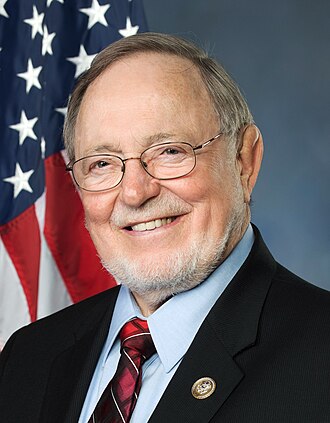
Rep. Don Young headshot

Don Young Voting Record & Scorecard | Institute for Legislative Analysis

US Representative from AK

District: At-LargeRepublican

2022 Alignment:

50.00%

District Performance
Cook PVI Rating: R+6 (Likely R)
District Estimate: 79%
District Performance: -29 (50.00%)
District Based Rating:
F

Lifetime Ratings by Policy Category

Click Icon to Filter Table

Title

Lawmaker Position

Harming Recruitment Efforts of Active Military Personnel by Providing GI Bill Education Benefits to All National Guard and Reserve Members.

The "Guard and Reserve GI Bill Parity Act of 2021" expands eligibility for Post-9/11 GI Bill educational assistance to national guardsmen and reservists.
Oppose is the Limited Government Position as the educational benefits provided under the GI bill serve as a significant recruitment benefit to entice individuals to serve our country in active service roles.
Expanding these benefits to all members of the national guard and reserve will not only cost taxpayers billions in additional costs, but may also persuade individuals to select reserve positions over active service roles.
Supports
Limited
Government

Hiking Non-Defense Domestic Spending by 7% and Promoting Cronyism through the Revival of Earmarks.

This vote authorizes the non-defense related components of the "Consolidated Appropriations Act, 2022" which funds government through the remainder of 2022. The package hikes spending by an average of 7 percent, sets aside over $20 billion for climate change research and resilience, and revives the practice of earmarks - congressionally directed spending - which has not been permitted for years due to the cronyism of the practice.
Oppose is the Limited Government Position as this bill further fuels out-of-control spending despite the fact congress is running a budget deficit of $1.
4 trillion. Significant cuts must take place across government in order to reverse our $30 trillion national debt, which coupled with the over $185 trillion in unfunded federal liabilities, represent the greatest existential threat facing this country.
Against
Limited
Government

Eliminating a Key Fiscal Safeguard within the U.S. Postal Service Resulting in $60 Billion in Unfunded Liabilities being Placed on Taxpayers.

The "Postal Service Reform Act of 2022" repeals a key fiscal safeguard implemented in 2006 which requires the United States Postal Service to prepay future retirement health benefits (i.e. "pay as you go"), thus now allowing USPS to further grow the over $60 billion in unfunded liabilities on its books.
Oppose is the Limited Government Position as the repeal of this essential safeguard will result in even less fiscal accountability at the agency and further balloon the already enormous amount of unfunded liabilities, which will ultimately become the responsibility of taxpayers.
Against
Limited
Government

Advancing the "COMPETES ACT" with $318 Billion in Wasteful Spending and Protectionist Trade Policies that Unnecessarily Hike Consumer Costs.

The "America Creating Opportunities for Manufacturing, Pre-Eminence in Technology, and Economic Strength (COMPETES) Act of 2022" as passed by the House on February 4, 2022, authorizes over $318 billion in new spending, including $95 billion in subsidies to semiconductor companies and various other manufacturing entities, $78 billion to the National Science Foundation, and $8 billion for the Green Climate Fund. Furthermore, the bill contains numerous trade-related provisions, such as boosting Trade Adjustment Assistance and subjecting significantly more goods to tariffs by restricting application of the "deminimis" provision, which exempts imports valued under $800 from duties.
Oppose is the Limited Government Position as much of this spending merely serves as corporate welfare and is unnecessary, especially at a time when the U.
S. national debt has exceeded $30 trillion and congress is running a budget deficit of $1.4 trillion. Furthermore, the bill's protectionist trade policies will drive up consumer costs and inflict significant financial harm onto countless small businesses, which import materials from overseas, and ultimately make American companies less competitive.
Supports
Limited
Government

Increasing Regulatory Certainty and Economic Growth by Removing the U.S. from the United Nations Climate Framework Convention.

The Perry Amendment #167 to the ""America COMPETES Act of 2022" requires the United States to withdraw from the United Nations Climate Framework Convention, which strives to control global greenhouse gas emission levels.
Support is the Limited Government Position as membership in world-wide initiatives, such as the UNCFC, nearly always result in overly-stringent environmental regulations being placed on the United States.
Meanwhile, countries that are engaging in horrendous environmental practices, such as China, must meet and comply with minimal standards. As a result, the U.S. is placed at a significant competitive economic disadvantage on the national stage and Americans are faced with higher consumer costs, all while having a miniscule impact on reducing global emissions.
Against
Limited
Government

Placing Unnecessary Requirements Surrounding "Environmental Justice" in U.S. Sanctions and Foreign Policy Operations.

The Jayapal Amd. No. 5 to the "United States Innovation and Competition Act" requires the State Department coordinate with the Department of Energy to report on the impact of US sanctions related to innovation, emissions reduction, climate cooperation, and economic justice.
Oppose is the Limited Government Position as foreign policy - especially the imposition of sanctions - are highly sensitive actions that have enormous impacts on global economic stability and United States national security.
Such actions should not be further complicated through unnecessary, poorly defined, and politized requirements.
Supports
Limited
Government

Jeopardizing National Security by Advocating the Removal of Sanctions on the Afghan Central Bank which will Provide the Taliban with $9.5 Billion.

The Jayapal Amd. No. 9 to the "America COMPETES Act of 2022" is largely designed to promote the removal of sanctions placed on the $9.5 billion in assets held by the Afghan central bank, which is under Taliban control following the U.S. withdrawal from Afghanistan. The amendment requires the Treasury Department to examine the humanitarian impact of the sanctions, the projected increases in civilian deaths and refugees, and the resulting effect on additional Chinese Government influence in Afghanistan.
Oppose is the Limited Government Position as the removal of the sanctions should be based on the merits of national security and foreign policy implication, especially considering the Taliban's ties to terrorist organizations.
Supports
Limited
Government

Weakening Election Integrity by Nationalizing the Election Laws of the States.

The "Freedom to Vote: John R. Lewis Act" provides the federal government new powers to set state election law. The bill includes a long list of provisions including, but not limited to, automatic voter registration, reducing voter ID requirements, increasing voting by mail, limiting voter roll maintenance, and making election day a federal holiday.
Oppose is the Limited Government Position as this measure is largely a political tool to benefit select candidates and ultimately reduces election integrity by overriding numerous anti-fraud measures that states across the nation have implemented to ensure free and fair elections.
Supports
Limited
Government

Avoiding Fiscal Responsibility through the Continual Passage of Short-Term Government Funding Bills

The "Further Additional Extending Government Funding Act" funds the federal government through March 11, 2022 and serves as the third short-term continuing resolution passed since early October. Without passing a continuing resolution, a partial government shutdown would occur, providing advocates of fiscal responsibility greater leverage in budget negotiations.
Oppose is the Limited Government Position as forcing a hard deadline on budget negotiations raises awareness of the nation's out-of-control spending and helps hinder passage of other wasteful spending measures such as the COMPETES act.
Substantial cuts must be made to the budget to eliminate the $1.4 trillion deficit and begin the process of paying down our $30 trillion national debt, which, when coupled with the over $185 trillion in unfunded federal liabilities, represents the greatest existential threat facing this country.
Against
Limited
Government

Eliminating an Unfair Carve-out Provided to Only Union Employees Within the Forced Arbitration Injustice Repeal (FAIR) Act.

The Fitzgerald amendment #184 to the "Forced Arbitration Injustice Repeal (FAIR) Act of 2022" removes an "unfair" provision that exempted union employees from having to comply with the FAIR act, which prohibits pre-dispute arbitration agreements from being enforceable if the arbitration surrounds an employment, consumer, antitrust, or civil rights dispute.
Oppose is the Limited Government Position as arbitration serves as a significantly less costly alternative to litigation and if lawmakers are going to enact such a policy - which ultimately enriches trial attorneys - then union employees should not be granted political favoritism through a special benefit not also afforded to non-union employees.
Against
Limited
Government

Increasing Frivolous Litigation and Legal Liabilities by Making "Hair Texture and Style" a Protected Characteristic in Employment and Housing.

The "Creating a Respectful and Open World for Natural Hair (CROWN) Act of 2022" makes a person's hair texture or hairstyle a protected characteristic if is commonly associated with a particular race or national origin. CROWN applies to public accommodations, employment, and federally assisted programs.
Oppose is the Limited Government Position as this bill allows anyone who alleges they have been discriminated against based on their hair to file a lawsuit in federal court in the same manner one may file under the Civil Rights Act and the Fair Housing Act.
As a result, both individuals making frivolous allegations and plaintiffs\' attorneys could abuse the court system and expose businesses to significant legal liabilities, potentially having the opposite intended outcome by making it more difficult for individuals with these hairstyles to find employment and housing.
Neutral
Logo

Let's build a platform together!

Quick Links

Resources

  • Data Sources
  • Report Correction

Contact

© 2023 - 2026 Institute for Legislative Analysis. All Rights Reserved.
Open Options